
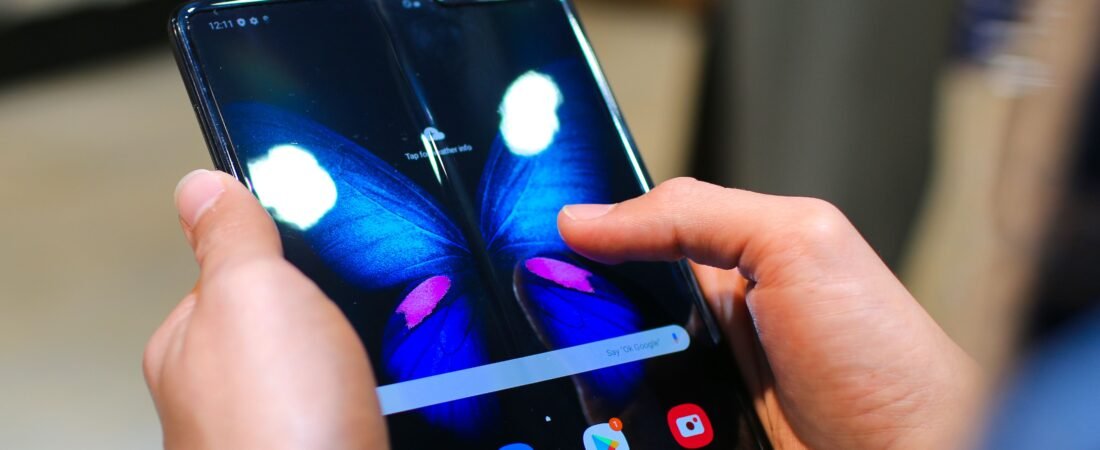
Apple has officially entered the foldable smartphone category with the launch of the iPhone Duo, marking the biggest redesign of the iPhone lineup in years. The device was introduced by John Ternus, who recently stepped in as Apple’s new CEO, making this his first major hardware unveiling in the role.
What the iPhone Duo Offers
The iPhone Duo opens up to reveal a 7.6-inch inner display, roughly the size of a small tablet, while a 5.4-inch outer screen keeps the phone usable when folded shut. Under the hood, Apple is using its new A20 Pro chip, built on a 2-nanometer process, one of the most advanced chip manufacturing processes available today. The processor is responsible for handling on-device AI tasks, meaning many AI features should run directly on the phone instead of relying on the cloud.
Apple also confirmed that the iPhone Duo supports the Apple Pencil, positioning the device as a hybrid between a phone and a compact tablet for note-taking, sketching, and productivity.
Pricing starts at $1,999, placing the Duo well above every other iPhone in Apple’s current lineup.
Why This Matters for the Foldable Market
Samsung and Huawei have been building foldable phones for years, but foldables still make up a small slice of the global smartphone market. Apple’s entry could change that. The company’s massive user base and app ecosystem give it the potential to push foldables from a niche format into a more mainstream category, the same way past iPhone launches reshaped other hardware segments.
By pricing the Duo as a premium, ultra-high-end device rather than a mainstream replacement, Apple appears to be testing the format cautiously before deciding whether foldables become a core part of its lineup.
Should You Buy It?
At $1,999, the iPhone Duo is a serious investment, and early adopters should expect the usual first-generation trade-offs: a thicker profile than a standard iPhone, and a premium price tag. If you love trying new form factors and want the latest Apple silicon, it’s a compelling option. If you’re looking for the best value, sticking with the standard iPhone lineup — or checking out our Buying Guides for more affordable options — is still the smarter move for most people.